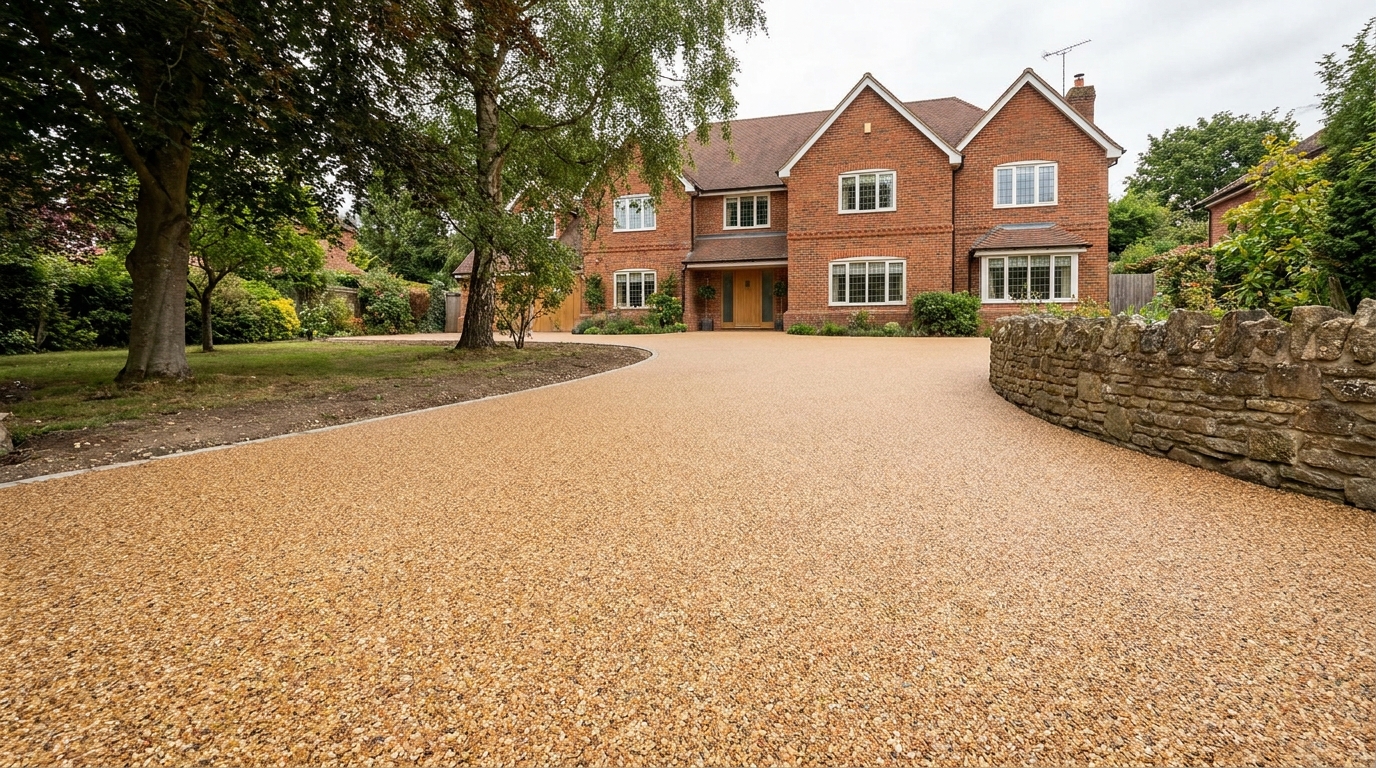
The short answer
For a UK residential driveway, UV-stable two-part aliphatic polyurethane resin is widely regarded by installers and Pavingexpert as the appropriate specification: it resists yellowing, stays flexible enough to absorb minor thermal movement and maintains its bond in the UK’s variable climate. Cheaper epoxy and acrylic systems are available but have material drawbacks for outdoor use. See how to choose an installer for how to verify what your contractor is actually using.
The resin binder is the invisible component that determines how a driveway ages, whether it yellows, whether it stays adhered to the base and whether it remains flexible enough to withstand the UK’s annual temperature range. Most homeowners are not chemists, and most marketing material glosses over the difference between resin types. This guide gives you the practical questions to ask so that the “best resin” is not just a claim in a brochure.
Resin types at a glance
- Recommended type UV-stable two-part aliphatic polyurethane
- Avoid Aromatic (yellows in UV); acrylic (weaker bond)
- Two parts Part A (isocyanate) & Part B (polyol) — mix on site
- Mix ratio Fixed by manufacturer — must be metered correctly
- Temperature range Typically −20°C to +70°C (cured)
- Key question Is it aliphatic (UV-stable) or aromatic?
Why the resin type matters so much
Resin-bound surfacing consists of aggregate bonded in a cured polymer. The aggregate provides texture, colour and structural bulk; the resin provides the adhesion that holds the stones together and bonds the layer to the base. A resin that deteriorates, yellows or embrittles under UV exposure or through the UK’s freeze-thaw cycles will fail over time even if the base is perfect and the aggregate is premium quality. The chemistry of the resin determines how long it maintains its bond, its colour stability and its flexibility. It is therefore one of the most important specification decisions in a resin driveway — yet it is rarely mentioned in contractor quotes that simply say “resin-bound driveway.”
Aliphatic polyurethane: why it is the standard
Two-part aliphatic polyurethane resins are the dominant choice for quality UK resin-bound installations. The word “aliphatic” refers to the molecular structure: aliphatic urethanes are inherently UV-stable because their chemical bonds are resistant to the photolytic degradation that causes colour change and brittleness. They maintain flexibility over the UK’s temperature range, remain bonded to the base through seasonal expansion and contraction, and resist common outdoor contaminants including dilute fuels and de-icing salts. Leading suppliers include Addagrip, Ronacrete, SureSet and others; the specific product name is less important than confirming the chemistry.
| Resin type | UV stability | Outdoor durability | Cost |
|---|---|---|---|
| Aliphatic polyurethane | Excellent | 15–25 years+ | Higher |
| Aromatic polyurethane | Poor — yellows | 5–10 years | Lower |
| Epoxy resin | Poor — yellows | 5–10 years outdoors | Medium |
| Acrylic | Moderate | 5–10 years |
Two-part vs single-part systems
Quality resin-bound systems use two-part (2K) resins: a component A (typically an isocyanate) and a component B (typically a polyol or resin base) that are mixed on site in a precise ratio by weight or volume. The chemical reaction between the two parts creates the cured polymer with its full strength and UV-resistance characteristics. Single-part resins that cure by moisture or UV exposure tend to have weaker bonds and less consistent cured properties. Two-part systems require care in measuring the correct mix ratio — getting it wrong degrades the cured performance — which is another reason the installer’s training and equipment matters. This is general information, not a professional recommendation for any specific product; always consult a qualified installer for product selection for your specific site and use.
Frequently asked questions
Is aliphatic or aromatic polyurethane better for driveways?
Aliphatic is significantly better for outdoor use: it is UV-stable and does not yellow. Aromatic polyurethane is cheaper but becomes yellow and brittle in sunlight within a few years.
Can epoxy resin be used for a driveway?
Epoxy resin is not recommended for outdoor UK driveways because it yellows and embrittles under UV exposure. It is more suited to indoor floors and industrial settings.
How do I know what resin my installer is using?
Ask for the product data sheet before work starts. The data sheet will confirm the resin chemistry, UV stability, cured temperature range and mix ratio. This is a reasonable and routine request.
Does the resin brand matter?
The chemistry matters more than the brand name. Aliphatic polyurethane from a reputable supplier is the key requirement. Several quality UK suppliers produce suitable systems; ask for the data sheet regardless of brand.
Sources & further reading
- Pavingexpert — guidance on resin chemistry, aliphatic vs aromatic polyurethane and product selection
- BALI — British Association of Landscape Industries on resin-bound product specifications
- BRE — Building Research Establishment on polymer binder durability and outdoor performance
- GOV.UK — no specific guidance; context from building regulations on outdoor surface performance
This is general information, not a site-specific survey, quote or professional advice. Prices, timescales and outcomes vary with your ground conditions, drainage and chosen installer. Always obtain a written quote and check the installer before committing.