The short answer
Resin-bound mixes every stone particle in resin before laying, creating a smooth, permeable, durable surface; resin-bonded applies resin to the base first then scatters stone over it, producing a rougher, non-permeable finish with a shorter lifespan. For a front driveway in England, resin-bound is almost always the better choice because it qualifies as permeable under planning rules. See planning permission for resin driveways for the detail.
The two names are used interchangeably in casual conversation and, frustratingly, by some contractors who would rather not explain the difference. It matters, though: resin-bound and resin-bonded are distinct products with different manufacturing processes, different drainage properties, different lifespans and different implications for planning. Getting clear on which you are being quoted for before you sign anything is essential.
Bound vs bonded at a glance
- Stone mixing Bound: mixed with resin; Bonded: scattered on top
- Permeability Bound: yes; Bonded: no
- Surface texture Bound: smooth; Bonded: loose/seeded
- Lifespan Bound: 15–25 yrs; Bonded: 5–10 yrs
- Planning (front drives) Bound: usually exempt; Bonded: may need permission
- Cost Bound typically 20–40% more than bonded
What resin-bound actually means
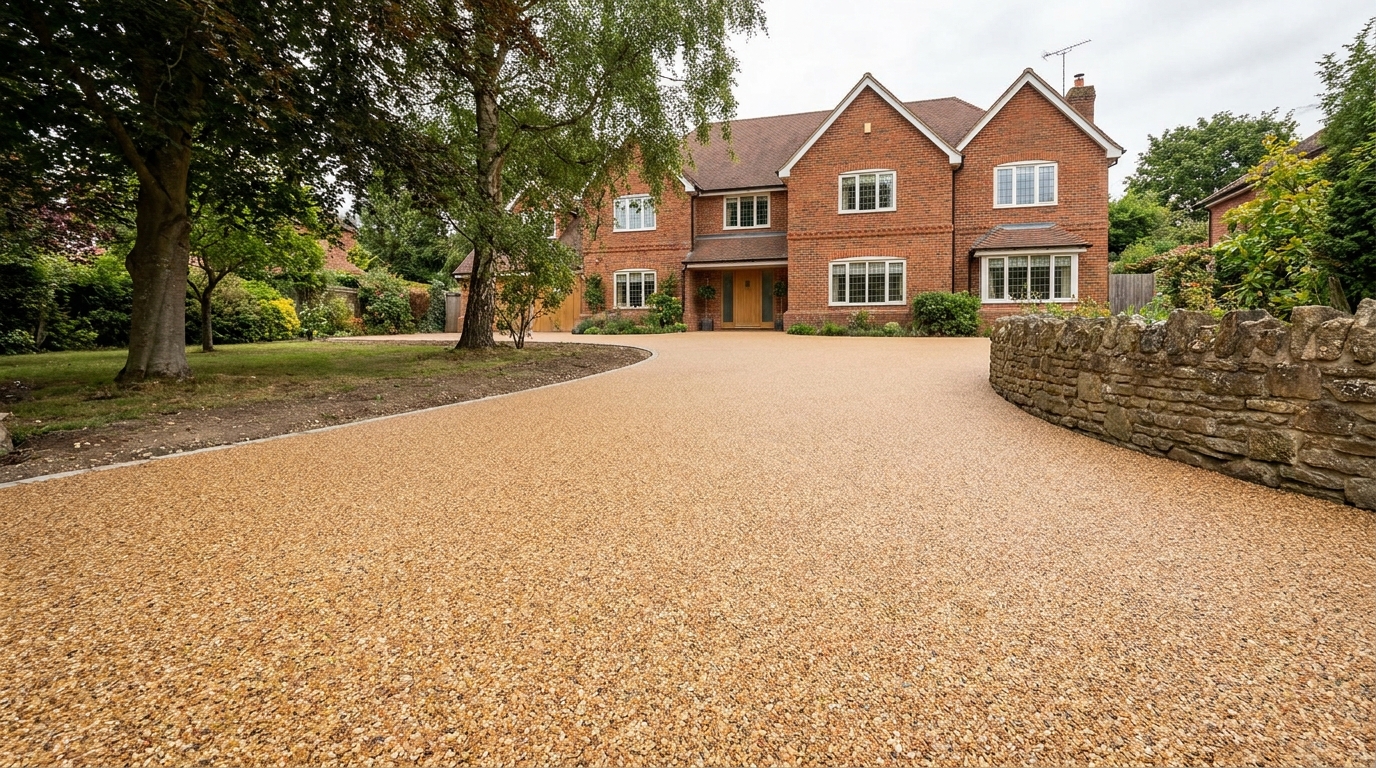
In a resin-bound system, dried aggregate is loaded into a forced-action (paddle) mixer with a measured dose of two-part UV-stable polyurethane resin. The mixer coats every stone particle thoroughly before the blended material is trowelled onto a primed base. Because the stones are bound into a matrix with consistent voids, the finished surface is smooth, solid and permeable: rainwater passes between the stones into the base and subbase below. This is the system most landscapers, BALI members and Pavingexpert recommend for residential driveways. It is also the product that satisfies the Government’s SUDS requirement for front driveways in England, meaning it is normally treated as permitted development and does not require planning permission.
What resin-bonded actually means
In a resin-bonded system, resin is applied wet to the surface of the base. Loose aggregate is then broadcast over the wet resin and pressed down, so only the underside of each stone is coated. The result looks superficially similar to resin-bound from a distance but is fundamentally different in structure: the gaps between the stones are not part of a designed permeable matrix, so water cannot drain reliably through the surface in the same way. Over time, the partially adhered stones are more vulnerable to being dislodged by traffic, frost action and cleaning pressure. A bonded surface typically lasts five to ten years before it begins to shed stones, whereas a well-installed bound surface should last 15–25 years.
| Criterion | Resin-bound | Resin-bonded |
|---|---|---|
| Process | Stone pre-mixed in resin | Resin on base, stone scattered |
| Permeability | Yes — SUDS compliant | No — run-off continues |
| Surface finish | Smooth, uniform, flush | Textured, slightly loose feel |
| Stone loss | Minimal when properly laid | Progressive with wear & frost |
| Lifespan | 15–25 years | 5–10 years |
| Planning (front drive) | Usually permitted development | May require permission |
Why the distinction matters for planning permission
Government guidance in England requires that front driveways either drain water through their surface (permeable) or drain to a garden or border, rather than discharging to the highway. A resin-bound surface meets the permeability test; a resin-bonded surface generally does not. This means a resin-bonded front driveway may technically require planning permission in England, adding cost and uncertainty to a product that is also less durable and harder wearing. Scotland and Wales have their own planning frameworks but apply similar principles. See do you need planning permission for a resin driveway for the full picture.
Which one should I choose?
For the vast majority of UK residential driveways, resin-bound is the right choice. It is more durable, it drains freely, it qualifies as permitted development, and it gives the smooth, seamless finish that most homeowners picture when they say “resin driveway.” Resin-bonded can be appropriate in certain pedestrian or low-traffic areas where cost is a primary concern and longevity is less critical — a garden path, for example — but for a driveway that takes daily car traffic, the longer lifespan and better drainage of a bound system more than justify the modest additional cost. Always compare quotes on a like-for-like basis: a bonded surface quoted at a lower rate per square metre is not the same product. See resin driveway cost for typical price ranges for both.
This page is general information and not professional advice; always obtain a written specification and quote from a qualified installer before proceeding.
Frequently asked questions
Is resin-bound or resin-bonded better?
For a UK driveway, resin-bound is better in almost every respect: it is permeable, more durable (15–25 vs 5–10 years), keeps its stones better and qualifies as permitted development.
How can I tell which type I have?
Run your hand across the surface: resin-bound feels smooth and solid; resin-bonded has a slightly rough, seed-coat feel. Pour a cup of water on it: resin-bound absorbs it; resin-bonded pools and runs off.
Does resin-bonded need planning permission?
It may, because it is not permeable. In England, non-permeable front driveways over 5 m² generally require planning permission. Resin-bound surfaces are usually exempt.
Is resin-bonded cheaper?
Typically yes, by 20–40%, but the shorter lifespan means the total cost over 20 years is often higher. The cost-per-year figure usually favours resin-bound.
Sources & further reading
- Pavingexpert — technical guides on resin-bound and resin-bonded surfacing methods
- GOV.UK — Planning permission for householders: driveways and the SUDS rules (England)
- BALI — British Association of Landscape Industries on hard-landscaping standards
- CIRIA — SUDS manual on permeable paving permeability requirements
This is general information, not a site-specific survey, quote or professional advice. Prices, timescales and outcomes vary with your ground conditions, drainage and chosen installer. Always obtain a written quote and check the installer before committing.