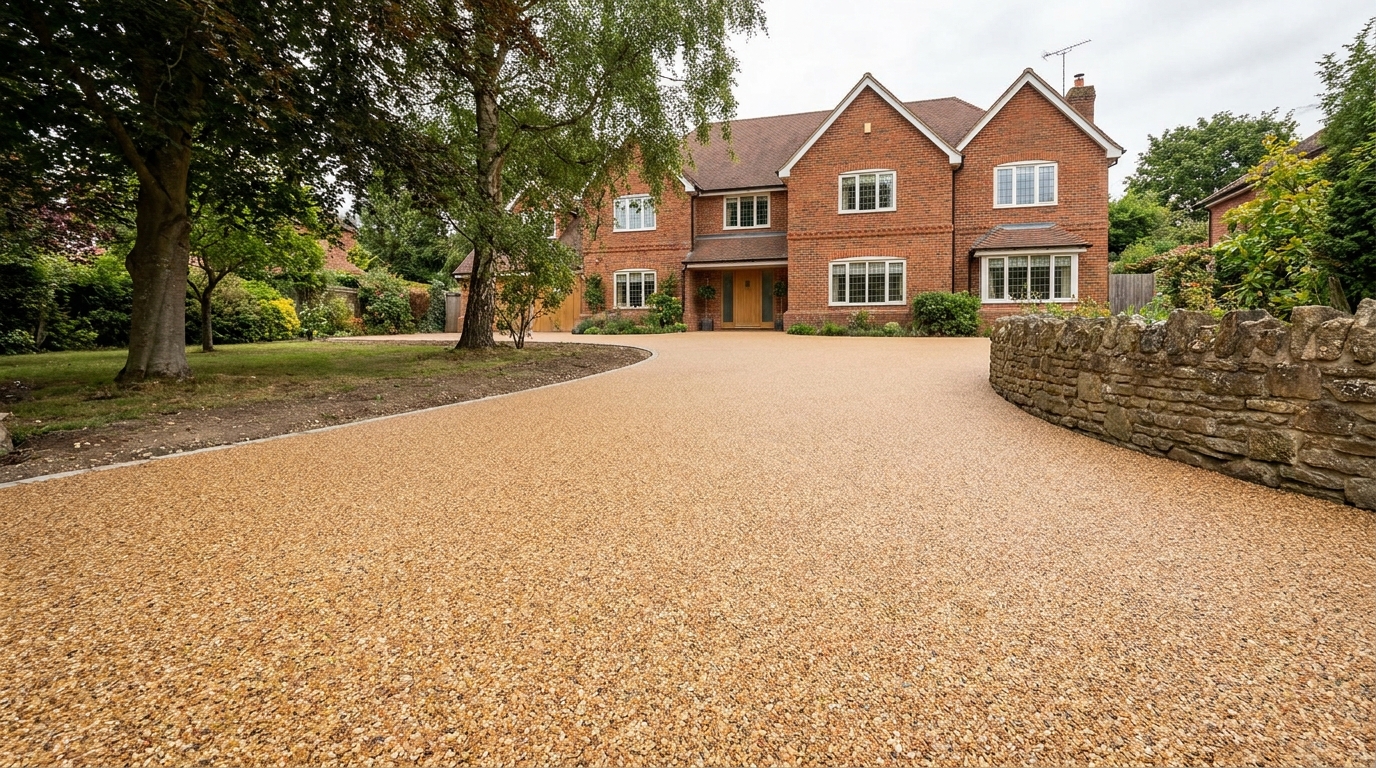
The short answer
A well-installed resin-bound driveway on a sound base typically lasts 15–25 years before the surface needs replacement. The key variables are installer quality, base condition, the resin system used and how much UV exposure the surface receives. Be wary of any installer who states a guaranteed fixed lifespan, as outcomes depend entirely on your specific site and installation. See resin driveway maintenance for how to extend the life of your surface.
Lifespan claims for resin driveways range from “over 25 years” in marketing materials to “two years before it all cracked” in online forum posts. Both can be true — and the difference is almost entirely down to the quality of the installation and the base beneath it, not the material itself. This guide gives an honest UK picture of what realistic longevity looks like and the factors that most affect it.
Resin driveway lifespan at a glance
- Typical lifespan (good install) 15–25 years
- Poor installation lifespan Often 2–5 years before visible failure
- Main factor Base quality and installer competence
- UV risk Non-UV-stable resins can degrade in 5–10 years
- Maintenance effect Annual care can add 5+ years to surface life
- End of life Usually resurfacing, not structural rebuild
What 15–25 years actually means in practice
A resin-bound surface does not have a single moment of failure; it ages gradually. In the first few years a sound installation should look almost exactly as it did when laid. Over the following decade a well-maintained surface may develop minor scuffs, slight colour change from UV exposure and small areas of algae in shaded spots — all of these are normal and manageable. Towards the end of its life the resin binder begins to break down: surface stones may start to loosen in localised areas, aggregate colours may have faded and the surface may look tired rather than failed. At that point a full resurfacing — laying a fresh resin-bound layer over the original — is usually more practical and cost-effective than a break-out and full replacement, provided the base beneath is still sound.
What shortens the lifespan
Most premature failures share one or more of these causes:
- Poor base preparation: cracks in the sub-base telegraph through the resin within months of laying; soft spots cause delamination and surface depression.
- Wrong or absent primer: without a compatible bonding primer the resin layer peels away from the base, often within the first year.
- Insufficient depth: a resin layer below 12 mm is too thin to withstand vehicle loads and will crack under tyres.
- Non-UV-stable resin: cheaper acrylic or epoxy resins without UV stabilisers can yellow, become brittle and craze in direct sunlight within five to ten years.
- Tree roots: roots growing under the base cause heave that cracks both the base and the resin above it. Trees within 3–5 metres of the driveway are a long-term risk.
- Chemical spills: motor oil, diesel and strong solvents can discolour and degrade the resin binder if not cleaned up promptly.
| Factor | Effect on lifespan | Mitigation |
|---|---|---|
| Sound, well-prepared base | Full 15–25 year potential | Insist on base assessment before laying |
| UV-stable polyurethane resin | Full colour & bond life | Ask for product data sheet |
| Correct depth (15–18 mm) | Structural adequacy under vehicles | Check depth in specification |
| Tree roots within 3 m | Can crack surface in 3–8 years | Root barrier or alternative surface |
| Chemical spills uncleaned | Local staining & binder degradation | Clean spills promptly |
What extends the lifespan
Regular, simple maintenance has a meaningful effect on how long a resin surface stays in good condition. Annual pressure-washing removes organic debris that, if left, retains moisture and provides a seedbed for algae and moss. An annual biocide spray (available from garden centres) controls algae growth in shaded areas. Prompt cleaning of oil or chemical spills prevents staining and binder degradation. Keeping heavy vehicles — lorries, skips — off a residential resin driveway avoids point loads the surface was not designed for. See resin driveway maintenance for the full year-round schedule. This is general information, not professional advice; actual lifespan varies with site conditions, installation quality and use.
Frequently asked questions
How long do resin driveways last in the UK climate?
Typically 15–25 years for a quality installation. The UK’s mix of rain, frost, UV and temperature cycling is well within the tolerance of a correctly specified UV-stable polyurethane resin.
Do resin driveways fade in the sun?
UV-stable two-part polyurethane resins resist fading well. Cheaper acrylic or non-UV-stable epoxy resins can yellow or fade in direct sunlight within 5–10 years. Always ask for the product data sheet.
Can a resin driveway be resurfaced rather than replaced?
Usually yes, if the base and original resin layer are still structurally sound. A fresh resin overlay extends the surface life without the cost of a full break-out.
Does frost damage resin driveways?
A properly installed resin-bound surface on a well-drained base is resistant to frost damage. Poor drainage below the surface can lead to frost heave, which is a base problem rather than a resin problem.
Sources & further reading
- Pavingexpert — guidance on resin-bound lifespan, UV stability and failure modes
- BALI — British Association of Landscape Industries on workmanship standards and realistic expectations
- CIRIA — SUDS manual on permeable paving performance and maintenance requirements
- GOV.UK — no specific lifespan guidance; building regs context on drainage performance
This is general information, not a site-specific survey, quote or professional advice. Prices, timescales and outcomes vary with your ground conditions, drainage and chosen installer. Always obtain a written quote and check the installer before committing.