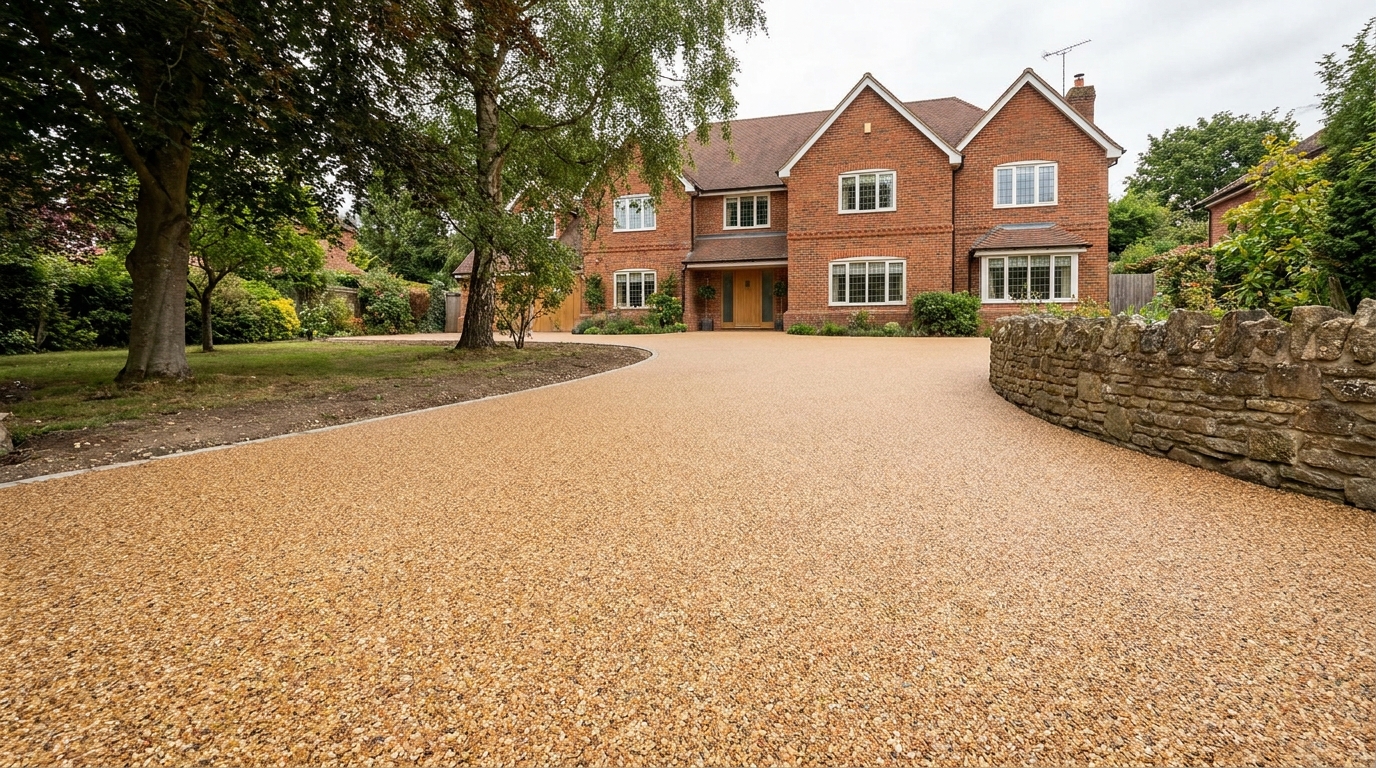
The short answer
Tarmac is cheaper (typically £25–£60 per m²) and faster to lay; resin-bound is more expensive (£50–£100+) but permeable, available in many colours, and lower-maintenance over its life. For a front driveway that must comply with planning rules on drainage, resin-bound is usually the more straightforward choice. See resin driveway cost and planning rules for the detail.
Tarmac and resin-bound are the two most commonly quoted materials for residential driveways in the UK, and they appeal to different priorities. Tarmac is the more established material, widely available at a lower cost per m², and is familiar to any surfacing contractor. Resin-bound is newer, more distinctive in appearance, permeable by design and available in a wide colour palette. Neither is the right choice for every homeowner; this guide compares them honestly across the factors that typically matter most.
Resin vs tarmac at a glance
- Tarmac installed cost £25–£60 per m² typical
- Resin-bound installed cost £50–£100+ per m²
- Tarmac colour choice Black only (unless coloured dressing applied)
- Resin colour choice 20–50+ aggregate blends
- Permeability Tarmac: no; Resin-bound: yes
- Lifespan (both) 15–25 years when well installed
Cost: tarmac wins on upfront price
Standard plain tarmac (macadam) is less expensive to supply and lay than resin-bound surfacing. Typical installed costs for a quality tarmac driveway in the UK run from £25 to £60 per m², depending on base work, depth and region. Resin-bound surfacing on the same base typically costs £50–£100+ per m². On a 50 m² driveway that means tarmac might cost £1,500–£3,000 and resin-bound £3,000–£5,500+. The upfront price difference is real and significant. Maintenance costs over 15–20 years are broadly similar, though resin requires no seal coating (which tarmac benefits from every 3–5 years) and no weed-killer in surface cracks.
| Criterion | Tarmac | Resin-bound |
|---|---|---|
| Installed cost (per m²) | £25–£60 | £50–£100+ |
| Colour | Black (or dark grey) | 20–50+ aggregate choices |
| Permeable | No (standard); yes (porous tarmac) | Yes (resin-bound) |
| Lifespan | 15–25 years | 15–25 years |
| Weed risk | Through surface cracks | Minimal (no open joints) |
| Repair | Patch-able; visible but blends over time | Patch-able; colour-match difficult |
Appearance: resin offers far more choice
Standard tarmac is black, which looks smart when new and blends into a muted UK streetscape. It fades to dark grey over time and cannot easily be changed. Coloured asphalt or a decorative tarmac dressing can add some variety but is limited compared with the palette available in resin. Resin-bound surfacing can be specified in honey, cream, dove grey, graphite, terracotta, silver, jet black and dozens of custom blends, and can use natural stone, recycled glass or marble chip aggregate to achieve distinctive finishes. If appearance and kerb appeal are priorities, resin-bound offers a wider range. If you simply want a clean, functional driveway at a lower price, tarmac delivers that reliably.
Drainage and planning permission
This is where the comparison tips decisively towards resin-bound for front driveways in England. Standard tarmac is an impermeable surface; a front driveway laid in non-permeable tarmac over 5 m² requires planning permission under the 2008 SUDS rules. Porous tarmac (open-graded asphalt) is available and does satisfy the permeability requirement, but it is less commonly specified for residential driveways and is more expensive than standard macadam, narrowing the cost gap. Resin-bound, by contrast, is inherently permeable and routinely satisfies the planning rules without any additional design or permission. See planning permission for resin driveways.
Which should you choose?
Choose tarmac if: budget is the primary concern, black is an acceptable colour, you are comfortable applying a seal coat every few years, and you are either at the rear of the property (where planning rules on permeability do not apply) or you can design drainage to a garden. Choose resin-bound if: you want a wider colour choice, the front driveway planning rules apply, you prioritise minimal weeding, or the property’s kerb appeal is a significant consideration. Either surface, well installed on a sound base, will give a decade and a half or more of service. This is general information, not professional advice; always obtain written quotes and a full specification before committing to either material.
Frequently asked questions
Is resin better than tarmac for a driveway?
It depends on priorities. Resin-bound offers more colour choice, is permeable and requires no seal coating. Tarmac is cheaper upfront. Both last 15–25 years when well installed.
Can resin be laid over old tarmac?
Often yes, if the tarmac is structurally sound. Cracked or failing areas must be repaired first. See can you lay resin over concrete or tarmac?
Does tarmac need planning permission?
Standard impermeable tarmac over 5 m² on a front driveway in England generally requires planning permission. Porous tarmac and resin-bound avoid this.
Is resin warmer than tarmac in summer?
Dark tarmac absorbs heat and can become very hot in direct summer sun. Lighter-coloured resin aggregates reflect more heat and are typically more comfortable underfoot in sunny conditions.
Sources & further reading
- Pavingexpert — comparative guidance on tarmac and resin-bound surfacing for driveways
- GOV.UK — Planning permission for driveways and the 2008 SUDS permeability rules
- BALI — British Association of Landscape Industries on driveway material standards
- CIRIA — SUDS manual on permeable paving and porous asphalt design
This is general information, not a site-specific survey, quote or professional advice. Prices, timescales and outcomes vary with your ground conditions, drainage and chosen installer. Always obtain a written quote and check the installer before committing.