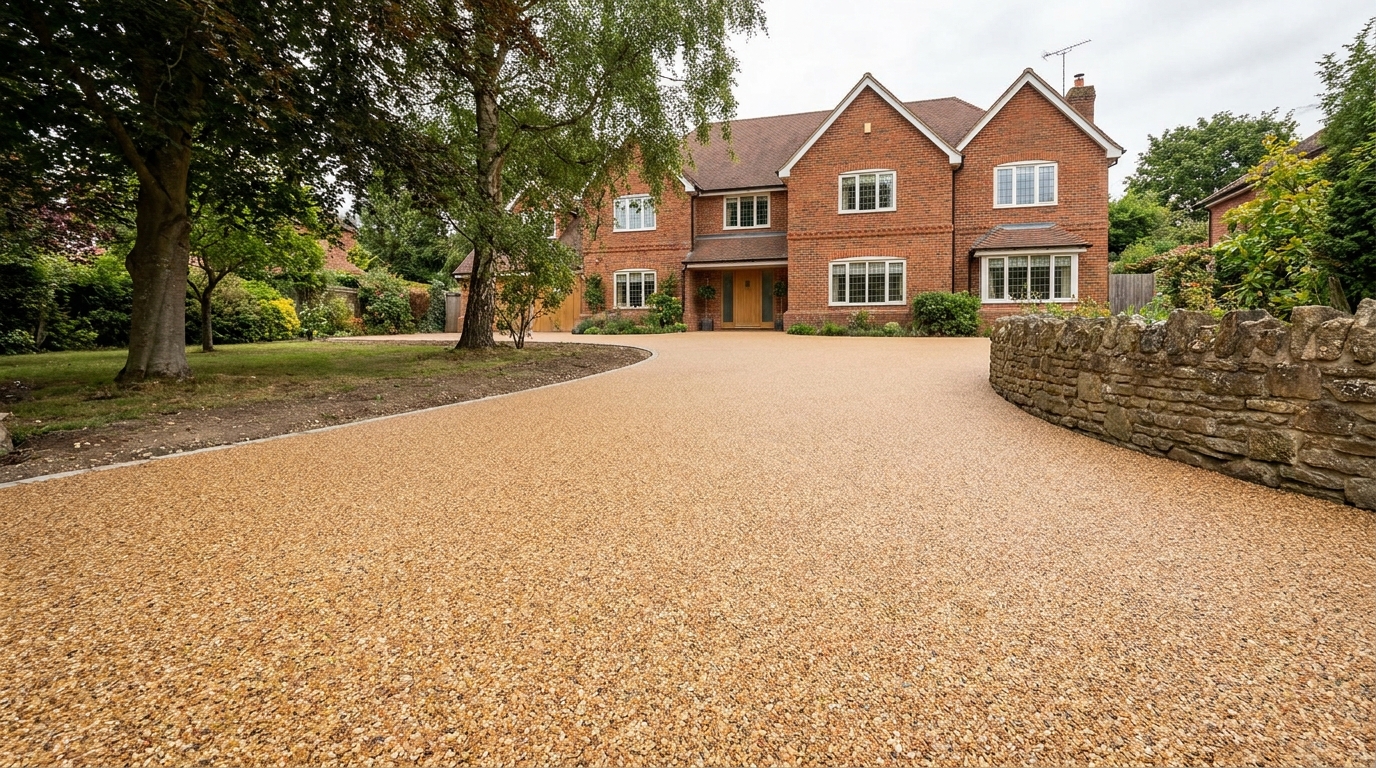
The short answer
Resin-bound surfacing can be laid over sound, structurally intact concrete, tarmac or block paving, provided the base is clean, flat, free of cracks and well-drained. If the existing base is cracked, delaminated or poorly drained, those faults must be fixed first or they will telegraph through the resin. See how a resin driveway is installed for the full preparation process.
One of the most common questions about resin driveways is whether the existing driveway needs to be removed first. The short answer is not always — resin-bound surfacing is designed as a thin overlay system and can go over several existing surfaces. The key is the condition of the base rather than the material it is made from. This guide sets out what to look for, what the deal-breakers are and what happens when a base is borderline.
Resin over existing base at a glance
- Over sound tarmac Yes — most common base for resin overlay
- Over sound concrete Yes — needs correct primer for concrete
- Over block paving Sometimes — depends on stability and level
- Over gravel No — resin needs a bound, solid base
- Cracked base Must repair cracks first or they telegraph through
- Damp / wet base Must be fully dry before priming or adhesion fails
What bases resin-bound can go over
Resin-bound surfacing is most commonly laid over an existing tarmac base, which is the simplest and most reliable combination. The tarmac provides a firm, stable, slightly porous surface that accepts primer and holds the resin bond well. Sound concrete is equally suitable, but requires a concrete-specific bonding primer rather than the bituminous primers used on tarmac; using the wrong primer type is a common cause of delamination on concrete bases. Block paving can be used as a base for resin overlay, but only if the blocks are stable, level and not rising or rocking — a block paved base that moves with traffic or frost will crack the resin above it. Loose gravel, soil, grass, clay or any unbound surface cannot be used as a base for resin.
| Existing surface | Suitable base? | Key condition |
|---|---|---|
| Tarmac / macadam | Yes | Must be structurally sound, free of cracks |
| Concrete (slabs or poured) | Yes | Concrete primer required; no active cracks |
| Block paving (well-bedded) | Sometimes | Must be stable, level, blocks not rocking |
| Old resin-bound | Sometimes | Must be sound and well-adhered to its base |
| Gravel / loose stone | No | No bound base for resin to adhere to |
| Soil / clay / grass | No | No structural base present |
The critical checks before any overlay
Whether the base is tarmac, concrete or block paving, an installer should carry out several checks before committing to an overlay rather than a break-out and replace:
- Structural integrity: walk every part of the base looking for soft spots, spongy areas or areas that crack underfoot. Any of these mean the sub-base below is failing and overlay alone will not fix it.
- Crack assessment: hairline cracks in concrete can often be filled and stabilised before overlaying. Working cracks — those that move with temperature or load — will re-appear through the resin within months and cannot be remedied by overlay alone.
- Drainage falls: the existing base must have adequate drainage falls (typically 1:60 or better) or any surface ponding problems will be replicated under the resin, which can damage the overlay over time.
- Delamination check: tap across the surface with a rubber mallet or timber block listening for hollow spots, which indicate the existing surface has de-bonded from the sub-base. Hollow areas must be cut out and repaired.
When the base needs to be replaced
An overlay is not always possible or sensible. If the existing base is severely cracked, has large sunken areas, has lost adhesion over a significant proportion of its area, or is simply too thin for the loads it carries, breaking it out and replacing it with a new tarmac or concrete base is the better option. This adds to the total project cost — typically £15–50 per m² for removal, disposal and a new macadam base — but means the resin above has a solid, predictable foundation. A reputable installer should advise honestly about whether an overlay is appropriate for your specific base condition rather than taking the quicker, cheaper route. This is general information, not professional advice; a site inspection by a qualified installer is essential before deciding on an overlay or a replacement.
Frequently asked questions
Can resin go over cracked concrete?
Minor hairline cracks can be filled before overlaying. Working cracks that move with load or temperature will telegraph through — these need fuller repair or base replacement before resin is laid.
Does the existing driveway need to be removed?
Not necessarily. If the base is sound, a resin overlay is common and cost-effective. If the base is failing or too thin, removal and replacement gives a better long-term result.
Can I lay resin over old block paving?
Only if the blocks are stable, level and not lifting. Rocking or moving blocks will crack the resin overlay above them. A specialist should assess the paving before deciding.
How thick is the resin layer over an existing base?
Typically 15–18 mm for vehicular driveways. Areas less than 12 mm are at higher risk of cracking under vehicle loads.
Sources & further reading
- Pavingexpert — guidance on overlay vs replacement for resin-bound installation on various bases
- BALI — British Association of Landscape Industries on base preparation standards
- GOV.UK — Building regulations Approved Document H on surface water drainage
- CIRIA — SUDS manual on permeable paving over various sub-base types
This is general information, not a site-specific survey, quote or professional advice. Prices, timescales and outcomes vary with your ground conditions, drainage and chosen installer. Always obtain a written quote and check the installer before committing.