The short answer
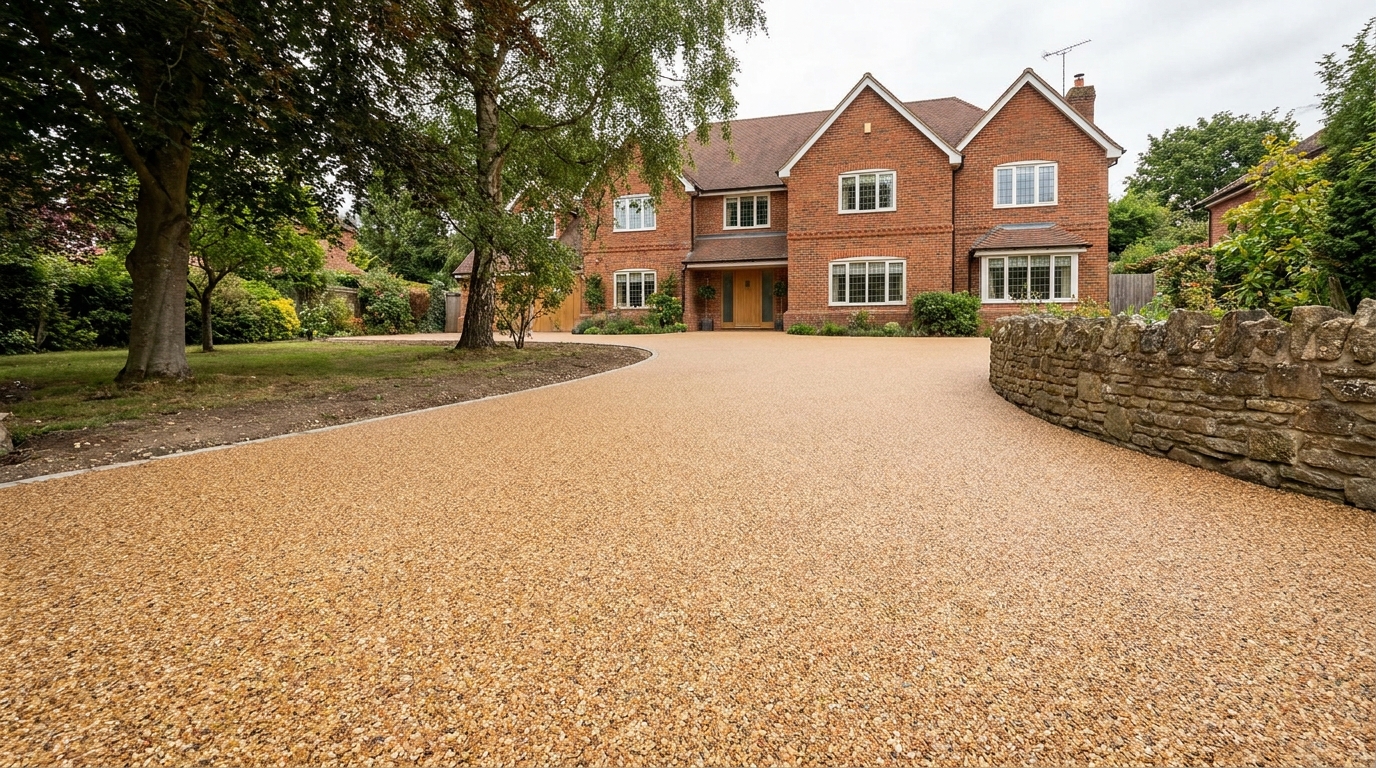
A resin driveway is a decorative, permeable surface made by mixing natural aggregate with a clear polyurethane or UV-stable resin and trowelling it over a prepared base. The stone particles are fully encapsulated so the colour of the aggregate shows through, giving a smooth, flush finish. Unlike loose gravel it does not scatter, and unlike block paving it drains freely through its surface. See our guide on resin-bound vs resin-bonded for the important distinction between the two types.
Resin driveways have grown rapidly in popularity across the UK over the past decade, driven by planning rules that favour permeable surfaces, the wide choice of aggregate colours, and the low day-to-day maintenance compared with gravel or block paving. The term covers two distinct products — resin-bound and resin-bonded — that look similar but behave very differently in use. Understanding which is which, and what sits underneath the resin layer, is the starting point for anyone considering one.
Resin driveway at a glance
- What it is Aggregate set in clear polyurethane or epoxy resin
- Two types Resin-bound (permeable) & resin-bonded (not permeable)
- Typical depth 15–18 mm resin layer over tarmac or concrete base
- Typical cost £50–£100+ per m² installed
- Planning permission Usually not needed — permeable surface rule applies
- Lifespan 15–25 years with routine maintenance
How resin-bound surfacing works
The most common type — and the one most people mean when they say “resin driveway” — is resin-bound. A measured quantity of dried aggregate (natural stone, recycled glass or marble chip, typically 1–6 mm in size) is blended in a forced-action mixer with a two-part UV-stable polyurethane resin. The mixture is trowelled immediately onto a primed base at a consistent depth, usually 15–18 mm, and smoothed flat. As the resin cures over several hours it bonds the stones together while leaving tiny air gaps between them; those voids are what make the surface permeable, allowing rainwater to drain directly through rather than running off across the property boundary.
The base beneath the resin is critical. Most installations go over a structurally sound tarmac or concrete slab, though a purpose-laid open-graded tarmac base is also common on new-build driveways. The resin layer itself contributes little structural strength; it is a wearing course, not a load-bearing one. See how a resin driveway is installed for the full process, including base preparation.
Resin-bound vs resin-bonded — the critical difference
Both products use aggregate and resin but in opposite ways. In resin-bonded surfacing, resin is applied to the base first and then loose stone is scattered over the top and pressed in; only the underside of each stone is coated, so gaps remain and the surface is not properly permeable. In resin-bound surfacing every stone particle is pre-coated in the mixer, so they bind into a solid, smooth, permeable matrix. The distinction matters for planning permission (resin-bound generally qualifies as a permeable surface under the SUDS rules) and for appearance (resin-bonded looks like a seeded surface; resin-bound is smooth and flush). Our dedicated page on resin-bound vs resin-bonded covers every difference in detail.
| Feature | Resin-bound | Resin-bonded |
|---|---|---|
| Permeability | Yes — SUDS compliant | No |
| Finish | Smooth, flush | Textured, seeded |
| Stone encapsulation | Full — mixed with resin | Partial — scatter-coat |
| Typical lifespan | 15–25 years | 5–10 years |
| Planning permission | Usually exempt | May be needed |
The aggregate and colour options
Because the resin is clear, the finished colour comes entirely from the aggregate. Installers typically offer a palette of 20–50 colours and blends, ranging from honey and cream tones through graphite and jet black to terracotta, silver and multi-blend finishes. Natural crushed granite, marble and quartzite are the most common materials; recycled glass and Venetian glass chips give a distinctive sparkle. Stone size affects both appearance and drainage: finer aggregates (1–3 mm) give a smoother, more refined look; coarser ones (3–6 mm) drain more freely and hide minor imperfections in the base. The choice of aggregate also affects how well the surface handles wear, UV and staining over time.
Why resin driveways have become so popular in the UK
Several factors coincide to make resin surfaces attractive to UK homeowners. The 2008 planning rules that require permeable front driveways (or planning permission for non-permeable ones) pushed many buyers away from block paving and towards resin-bound surfaces. The maintenance argument is compelling too: unlike gravel, there is nothing to scatter or redistribute; unlike concrete, there are no joints to weed; unlike tarmac, the surface feels warmer and is available in a wide colour palette. The flush, no-trip-hazard finish also appeals where step-free access is a priority. Design-led architects and landscapers have adopted resin-bound for its ability to flow around curves and raised edges without joints, giving a seamless look that suits both modern and traditional properties.
What resin driveways are not good at
No surface is without limitation. Resin-bound is a wearing course, not a structural layer; if the base beneath is cracked, unstable or too thin, those faults will telegraph through. On sloped driveways steeper than roughly 1:15, specialist anti-slip aggregates and thicker mixes may be needed. Moss and algae can grow in shaded or north-facing areas, though a proprietary biocide wash controls this. Tree root movement is a risk where roots run under the base. And the quality of the installed product varies significantly depending on the installer’s training, the resin system used and the care taken with base preparation — which is why choosing a resin driveway installer carefully is one of the most important decisions of the project. This page is general information, not a site survey or professional advice; always obtain a written quote from a qualified installer.
Frequently asked questions
Is a resin driveway the same as gravel?
No. A resin-bound driveway has the stones permanently bonded in resin so the surface is smooth, solid and will not scatter underfoot. Loose gravel is just stone without a binder.
Do resin driveways let water through?
Resin-bound surfaces are permeable — water drains through the voids between the stones into the base and subbase below. Resin-bonded surfaces are not truly permeable.
How long does a resin driveway last?
A well-installed resin-bound driveway on a sound base typically lasts 15–25 years. See our guide on how long resin driveways last.
Can I get a resin driveway in any colour?
Most installers offer 20–50 aggregate blends from honey and cream to jet black, graphite and terracotta. The colour comes from the natural stone or recycled glass aggregate, not a pigment.
Sources & further reading
- Pavingexpert — comprehensive technical guidance on resin-bound and resin-bonded surfacing
- BALI — British Association of Landscape Industries guidance on hard landscaping standards
- GOV.UK — Guidance on householder permitted development rights for driveways and SUDS rules
- CIRIA — Sustainable Drainage Systems (SUDS) manual on permeable paving design
This is general information, not a site-specific survey, quote or professional advice. Prices, timescales and outcomes vary with your ground conditions, drainage and chosen installer. Always obtain a written quote and check the installer before committing.