The short answer
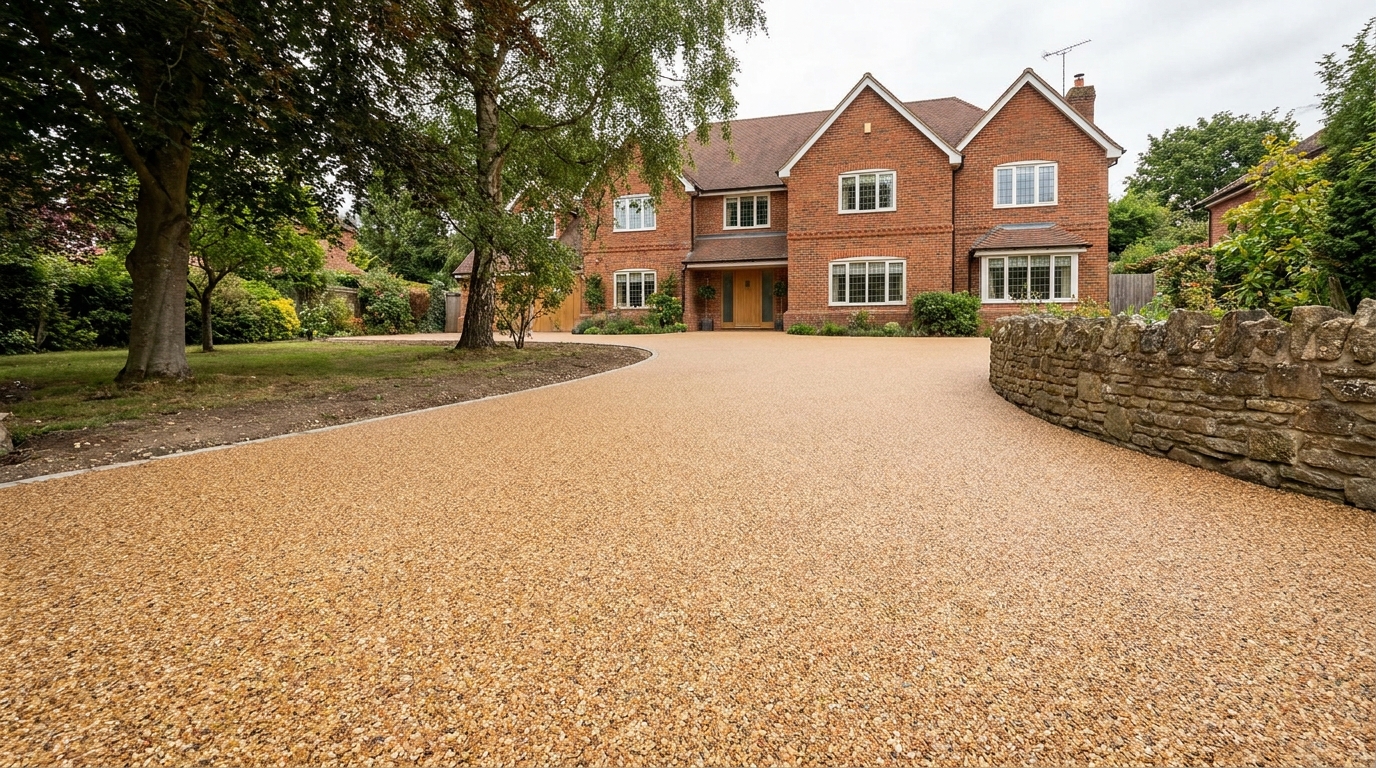
In England, a resin-bound driveway on the front of a house does not usually require planning permission because it is a permeable surface, satisfying the householder permitted development rules introduced in 2008. Resin-bonded surfaces (which are not permeable) may require permission if the driveway exceeds 5 m². Scotland, Wales and Northern Ireland have their own rules. Always check with your local planning authority if in doubt. See resin-bound vs resin-bonded for why the type matters.
Planning permission is one of the most searched questions about resin driveways, and the answer is relatively straightforward for resin-bound surfaces in England — but it depends on whether your surface is genuinely permeable, where the run-off goes, and whether any other permitted development conditions apply to your property. This guide explains the rules clearly and points out where you may need to check before work starts.
Planning rules at a glance
- Resin-bound (England) Usually no permission needed — it is permeable
- Resin-bonded (England) May need permission if over 5 m²
- Conservation area / listed building Check with your LPA before starting
- Run-off condition Must drain to garden, border or soak-away, not highway
- Scotland & Wales Similar principles — check with local authority
- If in doubt Submit a Lawful Development Certificate application
The 2008 rule and why it matters
In October 2008, the Government amended the permitted development rights for householders in England to address the growing problem of surface water run-off from hard driveways. The rule is simple: if you are creating or enlarging a hard standing in front of your house of more than 5 m², it must either be made of a permeable material or be designed so that any run-off drains to a permeable area, such as a lawn or border, rather than to the public highway. If neither condition is met, you need planning permission. The policy intent was to support Sustainable Drainage Systems (SuDS) and reduce the risk of local flooding from run-off.
Resin-bound surfacing, when correctly installed to a permeable open-graded base, meets the permeability test because rainwater passes through the voids in the matrix and into the base below rather than running off across the property boundary. That is why resin-bound is almost always treated as permitted development for a front driveway in England. Resin-bonded surfacing is a different matter: because it is not genuinely permeable, it does not satisfy the 2008 rule on permeability grounds, meaning it could require planning permission — another strong reason to choose resin-bound. See resin-bound vs resin-bonded.
| Surface type | Permeable? | Planning permission needed? |
|---|---|---|
| Resin-bound (correct base) | Yes | Usually not — permitted development |
| Resin-bonded | No | Possibly — check with LPA |
| Standard concrete | No | Yes if over 5 m² |
| Standard tarmac | No | Yes if over 5 m² |
| Block paving (permeable) | Yes | Usually not — permitted development |
Where the exemption does not apply
Permitted development rights are not universal. Several situations mean you should check with your Local Planning Authority (LPA) before starting any driveway work:
- Conservation areas: additional restrictions may apply to the external appearance of the property and the materials permitted for driveways.
- Listed buildings: listed building consent may be required as well as, or instead of, planning permission.
- Permitted development removed: some modern housing developments and rural properties have an Article 4 direction removing permitted development rights.
- Scotland, Wales and Northern Ireland: different legislative frameworks apply; the specific rules are set out by the relevant national government.
- Run-off does not drain to a garden: if the driveway falls towards the public highway rather than to a permeable area, you may need to install a channel drain even on a resin-bound surface.
Dropped kerb requirements
Installing a new dropped kerb to give vehicular access to a new or extended driveway requires separate permission from the highways authority — even where planning permission for the driveway itself is not needed. This is a highways consent, not a planning permission, and is usually handled by the local council rather than the LPA. Your installer should be able to advise, but responsibility for obtaining the consent rests with you as the homeowner. The cost of a new dropped kerb installation by the highways authority typically runs from £1,000 to £2,500+, depending on the area and the number of kerb stones involved. This page is general information, not legal or planning advice; always confirm the position with your local authority before committing to any work.
Frequently asked questions
Is planning permission needed for a front driveway in England?
Not if the surface is permeable (such as resin-bound) or run-off drains to a garden rather than the highway. Non-permeable surfaces over 5 m² generally do need permission.
Does a resin driveway in a conservation area need permission?
Additional restrictions may apply in conservation areas. Always check with your LPA before starting work in a designated area.
Who do I contact for a dropped kerb?
Your local highways authority, usually part of the county or unitary council. This is a separate process from planning permission and must be resolved before work begins.
What is a Lawful Development Certificate?
A formal decision from your LPA confirming that a proposed development does not need planning permission. It provides legal certainty and costs £108 in England as of 2024.
Sources & further reading
- GOV.UK — Planning permission for householders: driveways, hard standings and the 2008 SUDS amendment
- Planning Portal — Lawful Development Certificate guidance and application process
- CIRIA — SUDS manual on permeable paving, drainage and the policy intent of the 2008 rules
- GOV.UK — Highways Act 1980: dropped kerb consent from local highways authority
This is general information, not a site-specific survey, quote or professional advice. Prices, timescales and outcomes vary with your ground conditions, drainage and chosen installer. Always obtain a written quote and check the installer before committing.