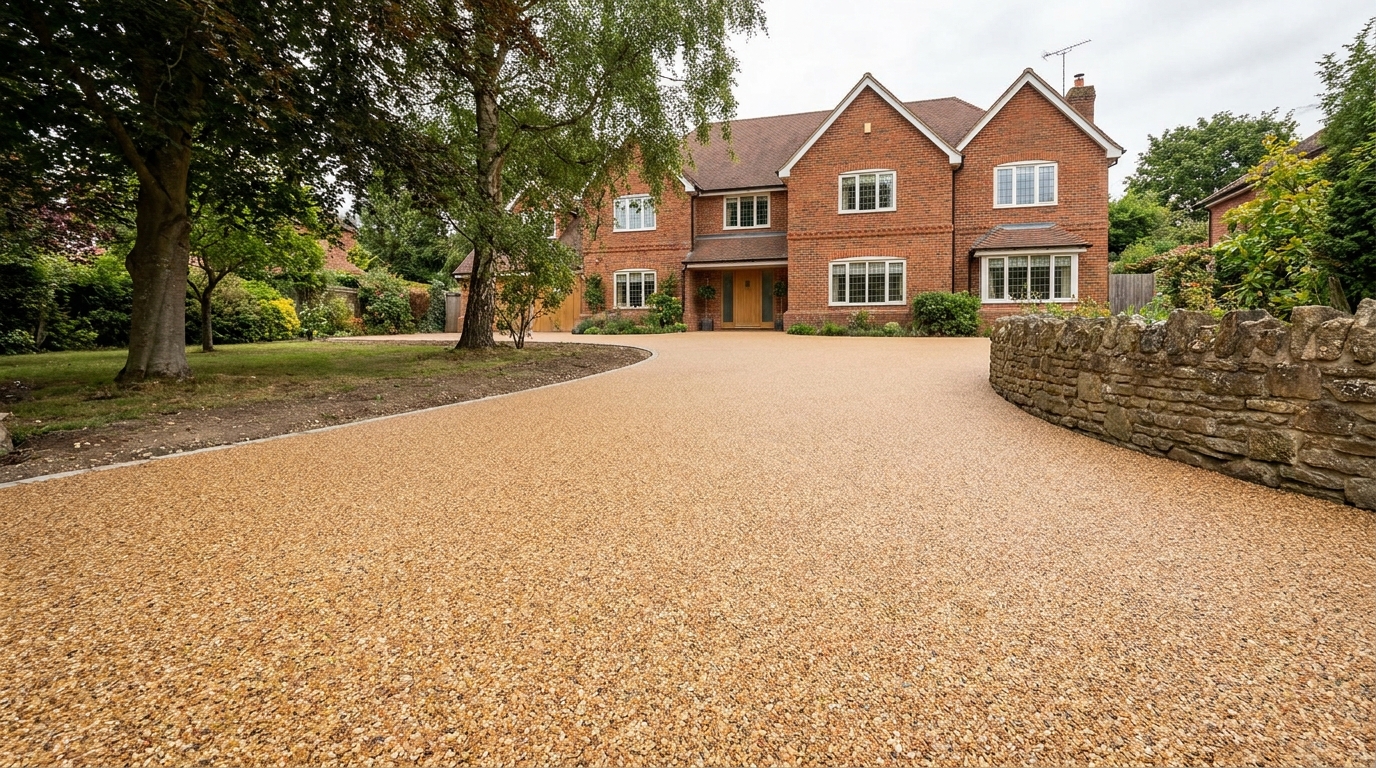
The short answer
Resin-bound driveways are low-maintenance compared with block paving or gravel, but they are not no-maintenance: an annual pressure-wash, biocide treatment for shaded areas and prompt attention to oil spills are the core tasks. Regular basic care can meaningfully extend the surface life. See how long a resin driveway lasts for the lifespan context.
One of the genuine advantages of resin-bound surfacing is that day-to-day maintenance is minimal compared with block paving (which needs joint sand management and weeding) or gravel (which needs raking and topping up). But “low maintenance” does not mean “no maintenance”, and a few hours of annual care makes a significant difference to how the surface looks and how long it lasts.
Maintenance at a glance
- Annual task Pressure-wash to clear organic debris
- Shaded areas Annual biocide spray to prevent moss & algae
- Autumn Regular leaf clearing — debris retains moisture
- Oil spills Clean immediately with a degreaser
- Winter Soft-bristle brush or plastic shovel for snow; avoid metal
- Avoid Petrol, bleach, aggressive acids on the surface
Annual pressure-washing
Once a year — most conveniently in spring — a thorough pressure-wash is the single most effective maintenance step for a resin-bound driveway. This clears the fine organic material (algae spores, leaf mulch, soil particles) that settles in the voids and on the surface between aggregate particles. Use a standard domestic pressure washer (not a turbo-nozzle or rotary head at maximum pressure, which can dislodge aggregate in older surfaces) at a medium fan setting and work systematically across the surface. For driveways with a significant algae or moss problem, treating with a dilute biocide solution an hour before washing and allowing it to dwell makes the washing more effective. Rinse off thoroughly after any chemical treatment.
| Season | Maintenance task | Priority |
|---|---|---|
| Spring | Annual pressure-wash, biocide if needed | High |
| Summer | Spot-clean oil spills promptly | Medium (as needed) |
| Autumn | Regular leaf clearing to prevent mulch build-up | High (weekly) |
| Winter | Salt/grit for ice; soft brush for snow | As needed |
| Year-round | Prompt cleaning of chemicals, degrease oil | High (immediate) |
Managing moss and algae
North-facing or heavily shaded resin driveways often develop patches of green algae or, in older surfaces, moss, particularly in the UK’s damp climate. This is cosmetic rather than structural but can reduce slip resistance if unchecked. A proprietary path and patio biocide — available from garden centres and builder’s merchants, often based on quaternary ammonium compounds or dichlorophen — applied following the manufacturer’s instructions is effective. Apply in calm, dry weather, allow to dwell, then wash off. Avoid using bleach or highly acidic products, which can affect the resin binder over time. An annual preventive biocide application in spring keeps growth from establishing rather than requiring a remedial treatment later.
Oil and chemical spills
Motor oil, diesel, petrol and aggressive solvents can stain and, over time, degrade the resin binder if left on the surface. The golden rule is to deal with spills immediately rather than leaving them to soak in. For fresh oil spills: absorb excess with dry sand or cat litter, sweep up, then apply a proprietary traffic-film remover or concrete degreaser and work it in with a soft brush before washing off with warm water. Avoid petrol-based solvents or acetone, which can dissolve the resin. For older, set-in oil stains, specialist resin-surface cleaning products are available from suppliers; results vary depending on how long the stain has been in place and the specific resin system. Prompt action makes all the difference.
Winter care
Resin-bound surfaces can be gritted or salted for ice in exactly the same way as any hard outdoor surface. Standard rock salt or de-icing grit causes no damage to the resin. What should be avoided is the use of metal-edged shovels or spades for snow clearing, which can score and chip the aggregate; a plastic-edged snow pusher is safer. Heavy-duty snow ploughs are not appropriate for residential resin driveways. The surface will not be damaged by frost itself provided the base drainage is working correctly and the sub-base is not saturated. This is general information, not professional advice; specific maintenance recommendations may differ depending on your resin system and installer.
Frequently asked questions
Can I pressure-wash a resin driveway?
Yes. A standard domestic pressure washer on a fan setting is fine for annual cleaning. Avoid rotary turbo heads at full pressure on older surfaces, which can dislodge aggregate.
What removes oil stains from resin driveways?
A proprietary concrete degreaser or traffic-film remover applied promptly and worked in with a soft brush, then rinsed off. Fresh spills respond much better than old ones. Avoid petrol-based solvents.
Can you use bleach on a resin driveway?
Generally not recommended. Bleach can affect the resin binder over time and may cause colour change. Use a proprietary path biocide for algae and moss control.
How often does a resin driveway need professional cleaning?
For most driveways, homeowner pressure-washing and biocide treatment once a year is sufficient. Professional cleaning is most useful for heavy algae or staining that has not responded to domestic cleaning.
Sources & further reading
- Pavingexpert — maintenance guidance for resin-bound and resin-bonded surfacing
- BALI — British Association of Landscape Industries aftercare recommendations
- HSE — guidance on use of biocide products outdoors (Biocidal Products Regulation)
- CIRIA — SUDS manual on maintenance of permeable paving surfaces
This is general information, not a site-specific survey, quote or professional advice. Prices, timescales and outcomes vary with your ground conditions, drainage and chosen installer. Always obtain a written quote and check the installer before committing.