The short answer
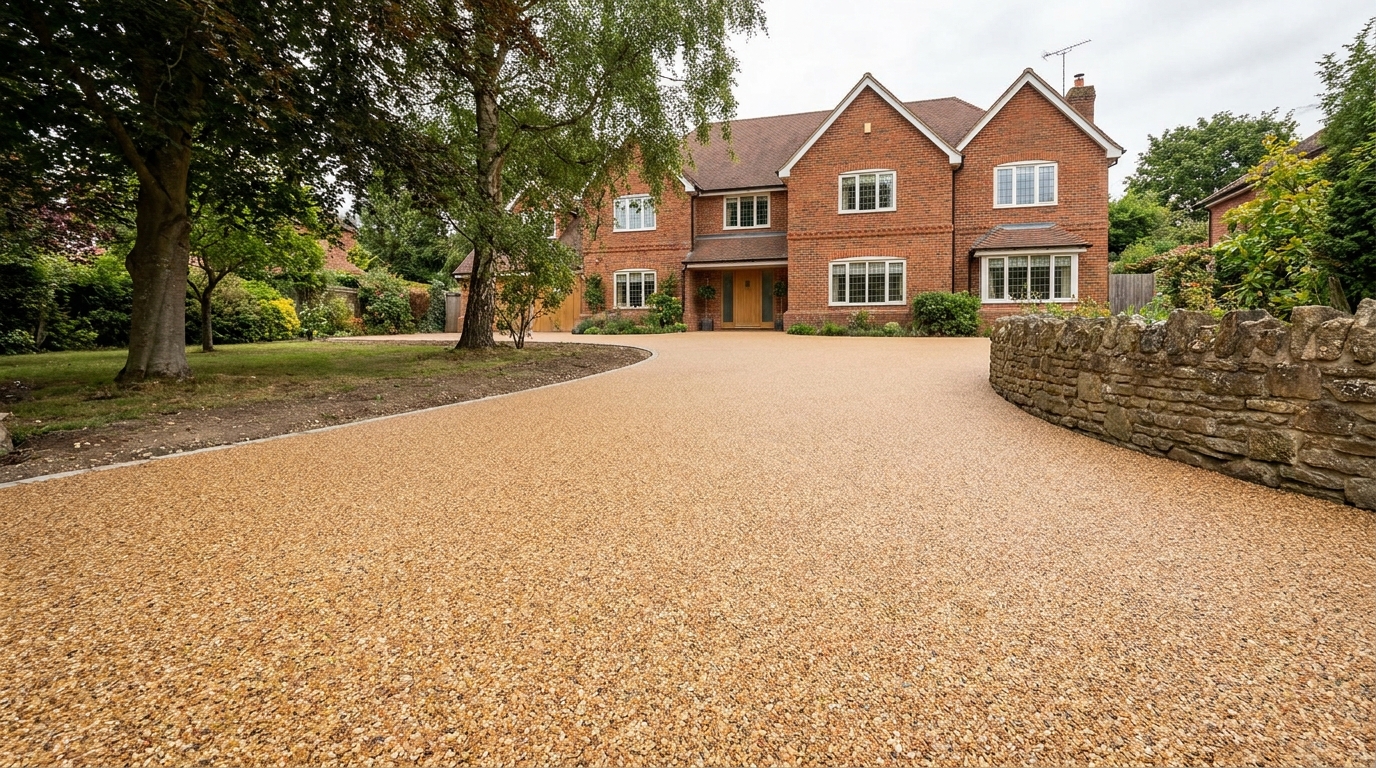
A properly installed resin-bound driveway with correctly graded aggregate provides adequate slip resistance for pedestrians and vehicles in wet UK conditions. The surface texture comes from the aggregate particle size; coarser stone gives more grip. Very smooth or fine aggregate, or a poorly laid surface with aggregate that has pushed down into the resin, can be slippery. Ask your installer for the specific slip-resistance value of their recommended aggregate blend. See is a resin driveway any good? for the wider quality picture.
Slip resistance is a legitimate concern for any outdoor hard surface. Resin-bound driveways have a justified reputation for being safe in wet conditions when correctly installed — the exposed aggregate provides a consistent texture — but the answer depends on the aggregate specification and the quality of the installation. This guide explains what determines slip resistance and what to check when specifying your driveway.
Slip resistance at a glance
- Properly installed (coarse agg.) Good slip resistance for pedestrians & vehicles
- Fine aggregate (<1 mm) Lower grip; not recommended for main drives
- Test standard (pedestrian) Pendulum slip resistance test (SRV)
- Moss & algae Significantly reduces grip if not treated
- Prevention Annual biocide, clean surface, correct aggregate
- Vehicle grip Tyre contact area sufficient; not an issue at low speeds
How resin-bound surfaces provide grip
Unlike a polished concrete or glazed tile, a resin-bound surface has a natural three-dimensional texture from the exposed aggregate particles. When you walk on it wet, your foot contacts the peaks of the stone particles rather than a flat resin film. The result is a micro-rough surface with drainage properties — the rainwater passes through the voids between the stones rather than forming a sheet of water on top — which further reduces the slip risk compared with an impermeable surface of similar smoothness. This is one reason resin-bound is commonly used in commercial and public realm settings where slip resistance standards are formally specified.
How aggregate size affects grip
The single biggest determinant of surface slip resistance is the aggregate particle size and the proportion of the stone that sits proud of the resin surface. Coarser aggregate blends (3–6 mm) expose more stone texture and provide more grip underfoot. Very fine aggregate (under 1 mm) gives a smoother, almost polished finish that is both aesthetically pleasing and less grippy in wet conditions. For a residential driveway that takes pedestrian traffic, a minimum aggregate size of 1–2 mm is generally considered prudent; 2–4 mm gives better grip. Installers who use unusually fine aggregate to achieve a designer-smooth appearance may be prioritising looks over safety on a surface that will be walked on by adults, children and elderly people in all UK weather conditions.
| Aggregate size | Surface texture | Slip resistance | Common use |
|---|---|---|---|
| <1 mm (very fine) | Very smooth | Lower | Decorative paths only |
| 1–2 mm | Smooth | Moderate | Low-traffic areas |
| 2–4 mm | Textured | Good | Standard driveway |
| 4–6 mm | Coarse | Very good | Steep slopes or high-grip areas |
Steep slopes and high-risk areas
On driveways steeper than about 1:12, additional thought should be given to slip resistance. In these situations, installers sometimes specify coarser aggregate, a higher aggregate-to-resin ratio (leaving more stone proud of the surface) or a dedicated anti-slip aggregate blend. The finished surface still looks like a standard resin-bound drive but has a noticeably grittier texture. If your driveway has a significant gradient, discuss the slip-resistance specification explicitly with your installer before agreeing the aggregate blend. Public-realm and commercial specifications routinely test surfaces with the pendulum slip resistance test; residential installations do not always require formal testing, but knowing the typical SRV of the product your installer uses is a reasonable thing to ask. This is general information, not safety advice; always consult a qualified installer for your specific site conditions.
Frequently asked questions
Are resin driveways safe for elderly people?
A correctly installed resin-bound surface with adequate aggregate texture is generally safe for pedestrians including elderly people. Regular cleaning to prevent algae is the most important maintenance step.
Are resin driveways slippery in ice?
Like any hard outdoor surface, resin-bound can be icy in freezing conditions. Standard road salt or grit can be used; avoid using metal shovels which can score the surface.
Can aggregate be added to a slippery resin driveway?
If a surface is too smooth, anti-slip grit can sometimes be applied in a clear coat, but results vary. It is far better to specify the correct aggregate size from the outset.
Does pressure-washing make resin driveways slippery?
A freshly pressure-washed, clean resin surface is not more slippery than before washing. Cleaning removes organic material that would otherwise reduce grip.
Sources & further reading
- Pavingexpert — guidance on aggregate size, slip resistance and surface texture for resin-bound paving
- BALI — British Association of Landscape Industries installer standards including surface safety
- HSE — Health and Safety Executive guidance on slip resistance of outdoor surfaces (HSG155)
- CIRIA — SUDS manual on aggregate selection for permeable paving
This is general information, not a site-specific survey, quote or professional advice. Prices, timescales and outcomes vary with your ground conditions, drainage and chosen installer. Always obtain a written quote and check the installer before committing.