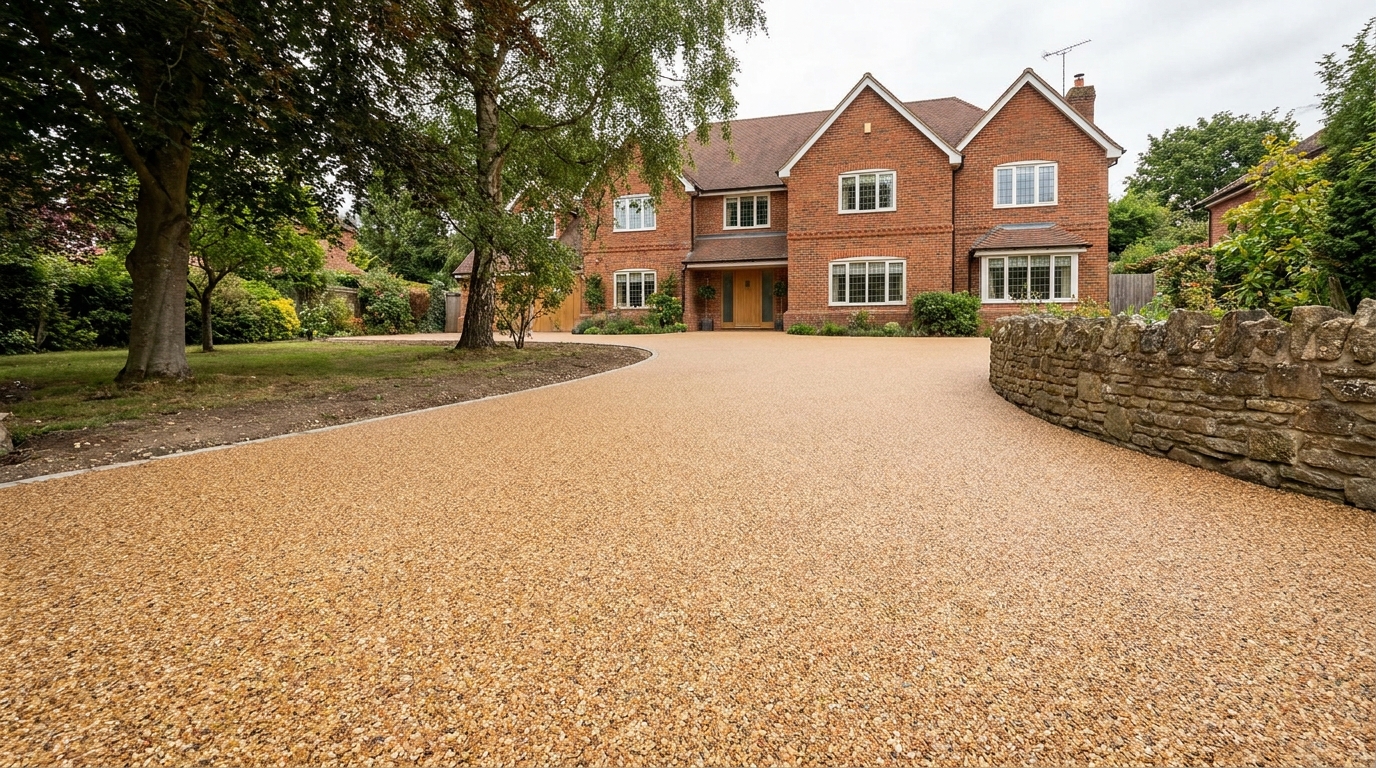
The short answer
A correctly installed resin-bound driveway on a sound base is a genuinely good product: it is permeable, attractive, low-maintenance and long-lasting. Most complaints about resin driveways trace back to poor base preparation, wrong resin mix or low-skill installation, not to any fundamental flaw in the material. See our guide on resin driveway pros and cons for the full balanced picture.
Online forums contain both glowing reviews and horror stories about resin driveways, which makes it hard to form a fair view. The key is that resin-bound surfacing is genuinely a good product when the right system is installed properly on a suitable base — but installer quality varies enormously, and a poorly laid job will fail in one or two years regardless of the resin brand. This guide separates the material’s real qualities from the problems that come from poor workmanship.
Is resin any good? At a glance
- Material quality Excellent when UV-stable polyurethane is used
- Base dependency High — results vary with base condition
- Lifespan (good install) 15–25 years
- Lifespan (poor install) Often 2–5 years before visible failure
- Main failure mode Base cracking, poor adhesion, wrong mix ratio
- Key variable Installer quality and resin system specification
Why resin driveways have a mixed reputation
The UK residential market saw rapid growth in resin driveway installations through the 2010s and 2020s, and inevitably some of that growth was met by inexperienced contractors using cheaper materials. The result is a split reputation: homeowners with driveways installed by BALI-accredited or similarly trained contractors often report excellent results; those who chose the cheapest quote sometimes find cracks, loose stones or colour fading within a few years. The material itself is not at fault in either case — the installation quality is. This is why Pavingexpert and BALI both emphasise that resin surfacing is only as good as the base preparation and the installer skill behind it.
What makes a resin driveway genuinely good
A well-installed resin driveway offers several qualities that are genuinely difficult to match with competing materials:
- Permeability: a properly graded resin-bound surface drains 600–900 litres of water per square metre per hour in standard tests, comfortably exceeding the SuDS threshold, which is why it qualifies as permitted development for front driveways.
- Low weed growth: because there are no open joints, weeds have almost nowhere to establish, unlike block paving or gravel. Occasional biocide use and clearing of wind-blown organic matter is all that is typically needed.
- Consistent appearance: the colour and texture are uniform across the whole surface when properly mixed and laid, because the aggregate-to-resin ratio is controlled in a forced-action mixer, not guesswork.
- Slip resistance: well-graded aggregate gives a slip-resistance value (SRV) adequate for pedestrians and vehicles in wet conditions — see are resin driveways slippery?
Common problems and what causes them
Most resin driveway failures fall into a small number of categories, and almost all trace back to installation rather than the material itself:
| Problem | Most likely cause | Prevention |
|---|---|---|
| Cracking | Weak or cracked base, root movement | Sound base, remove nearby roots |
| Delamination (resin peeling) | Wet base, wrong primer, no adhesion | Dry day, correct primer, BALI-trained installer |
| Colour fade or yellowing | Non-UV-stable resin or cheap aggregate | UV-stable two-part polyurethane resin |
| Loose or missing stones | Wrong resin–aggregate ratio, poor mixing | Forced-action mixer, correct ratios |
| Ponding water | Insufficient base falls, blocked voids | Correct base grading, annual maintenance |
How to judge quality before you commit
Ask any installer to provide photos and, ideally, references from driveways they laid 5–10 years ago. A contractor who cannot show you ageing work is one who either has not been doing this long enough or has not done work worth showing. Ask specifically which resin system they use, whether they use a forced-action (paddle) mixer (not a drum mixer), and what they will do to the existing base. If the answer to any of those is vague, treat that as a warning sign. See how to choose a resin driveway installer for the full set of questions. This is general information, not site-specific advice; a written specification and quote from a qualified installer is essential before any work proceeds.
Frequently asked questions
How long do resin driveways really last?
Properly installed on a sound base, 15–25 years is realistic. Poor installation or a failing base can see problems within 2–5 years. See how long resin driveways last.
Are cheap resin driveways worth it?
Usually not. The main cost in a resin driveway is skilled labour and base preparation; cutting corners there is what causes early failure. A very low price per m² is more likely to reflect poor materials or thin labour than a genuine bargain.
Can resin driveways be repaired?
Localised damage can be repaired, but matching the colour exactly is difficult, so patches are usually visible. Avoiding damage in the first place — via good base preparation and installation — is far better than relying on repairs.
Is resin better than block paving?
For low maintenance, permeability and seamless looks, resin-bound has advantages. Block paving is easier to repair (individual blocks can be lifted and relaid) and can last longer with less skill in the laying. See resin vs block paving.
Sources & further reading
- Pavingexpert — technical guidance on resin-bound quality, failure modes and base preparation
- BALI — British Association of Landscape Industries accreditation and quality standards
- CIRIA — SuDS manual on permeable paving drainage rates and standards
- GOV.UK — Planning guidance on householder driveways and permitted development
This is general information, not a site-specific survey, quote or professional advice. Prices, timescales and outcomes vary with your ground conditions, drainage and chosen installer. Always obtain a written quote and check the installer before committing.